What is Bloom foam?
Bloom foam is an innovative material used to make shoe soles, produced by blending algae powder with EVA (Ethylene Vinyl Acetate), a synthetic material.
Unlike Bloom foam, conventional soles are made from 100% synthetic materials. Bloom foam is therefore seen as a more eco-friendly alternative.
© Bloom
Bloom foam soles for more eco-friendly trainers
Bloom foam is presented as a material with eco-friendly qualities, mainly because of its composition.
Thanks to the use of algae, it cuts the use of synthetic materials by 15 to 20% in the making of soles.
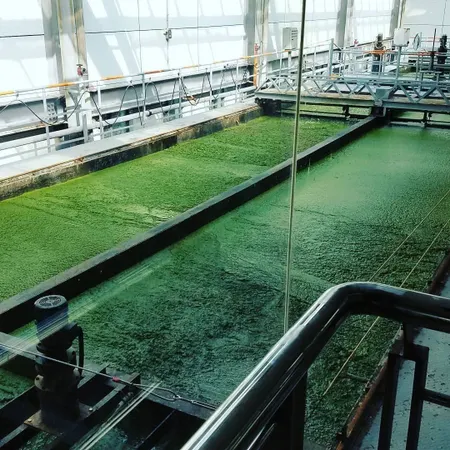
It also tackles a major problem: algae blooms. Warming and chemicals discharged into rivers and lakes have caused massive algae growth, which pollutes the water and disrupts wildlife and plant life. The algae used to make Bloom foam are harvested directly from these polluted areas, helping to clean the water.
According to the brand Bloom*, 1 pair of shoes means 112.5 litres of water filtered and returned to its habitat.
Finally, algae are a natural resource that does not come from farmable land needed for food crops.
Unfortunately, Bloom foam soles are not biodegradable, because of the EVA (Ethylene Vinyl Acetate) mixed with the algae during manufacturing.

Bloom foam: how does it work?
The algae are collected and processed as follows:
- The algae-contaminated water is pumped through a filtering system that protects other species.
- A non-hazardous coagulant is added to the collected water so the algae clump together.
- The algae rise to the surface, where they can be collected.
- The water is filtered and returned "clean" to its environment.
- The algae are then dried.
- Once dry, the algae are ground into a powder and turned into flakes, ready to be mixed with other components.
*Source: Bloom