Free returns & exchanges

// The men's jeans guide

The Right
Jeans.

Finding jeans that really fit is hard enough already. So you shouldn’t have to investigate how they’re made as well.

We’ve brought all our choices together here: the brands we picked, what we really look at when selecting them, the cuts we love and our tips for finding the right size.

The goal: to find jeans you're proud of and really want to wear. Often.

// Our selection

How we choose
our jeans.

Jeans seem simple.
Cotton, blue fabric, a few seams.

In reality, between growing the cotton, the fabric composition, dyeing, washing, treatments and sewing, a lot happens before they reach your wardrobe.

So to choose the jeans we offer you, we look at all of that. Not just the “organic cotton” label.

The perfect pair of jeans probably doesn't exist. Our job is to make the best possible choices, one criterion at a time.

90%

Minimum share of eco-friendly materialsin every pair of jeans we select.

And this is only the start of our work.

The material: not all cotton is equal.

Jeans are mostly made of cotton. In conventional fashion, this cotton may be grown with synthetic pesticides and fertilisers and use a lot of resources.

So we favour organic cotton, recycled cotton and certain alternative fibres when they offer a real benefit.

Organic cotton
We improve the way a new fibre is produced.
Recycled cotton
We reuse material that already exists and reduce the need for new virgin fibres.

The two aren't necessarily at odds. For example, a denim can combine recycled and organic cotton to get enough recycled material while keeping the fabric hard-wearing.
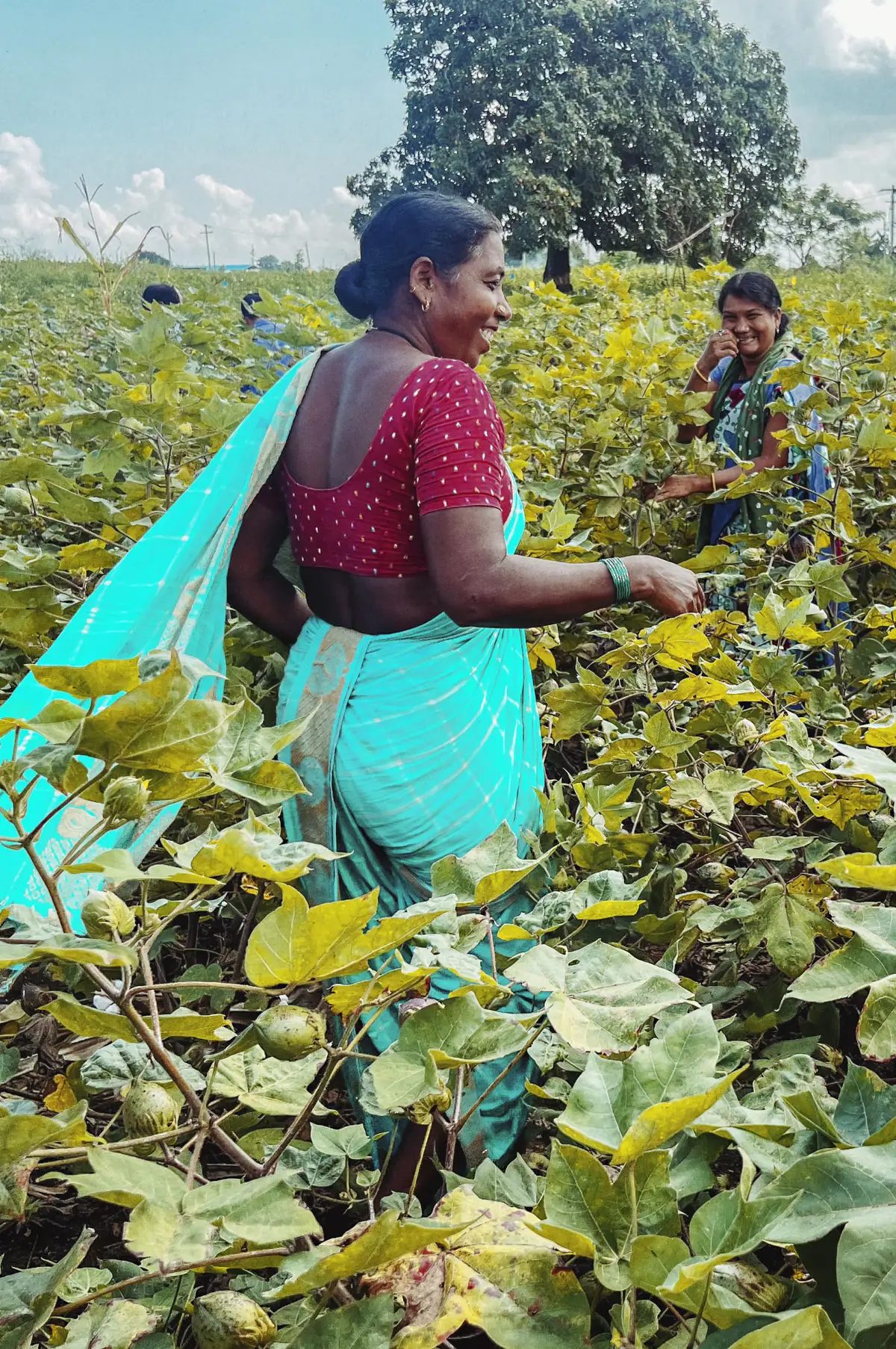
Cotton being harvested in a field
It all starts in a field.

Recycle more, yes. But not if the jeans become so fragile they need replacing twice as fast.
100% cotton… or a little stretch?

On paper, we really like 100% cotton jeans. The fewer fibres are blended, the easier the material generally is to recycle at the end of its life. Rigid cotton also makes for sturdy fabrics that age beautifully over time.

But there's another fairly important factor: some cuts and some body shapes need a little stretch to be truly comfortable. So we also offer some jeans with a small proportion of elastane.

100% cotton

  • easier at end of life
  • often sturdy fabric
  • lovely patina

With a little elastane

  • more comfort
  • more choice of cuts
  • may suit some body shapes better

Our rule isn't "zero elastane at all costs". It's: no elastane when we can do without it, and only when it really adds something to the garment.

The best jeans on paper aren't necessarily the ones you'll wear the most. And how long you wear them remains one of the most important factors.

You still need to be able to get into your jeans.

Everything it takes to make blue.

Raw jeans don't turn blue, faded or worn-in by themselves. Before they reach your wardrobe, the denim may go through dyeing, washing, fading, softening, distressing and finishing treatments.

In conventional manufacturing, these steps can use a lot of water and many chemicals. At WeDressFair, we look in particular at:

  1. the dyeing processes used
  2. restricted or banned chemicals
  3. washing and finishing techniques
  4. wastewater treatment
  5. the workshops' certifications and commitments

Changing the cotton matters. Not undoing all that effort during dyeing and fading matters just as much.

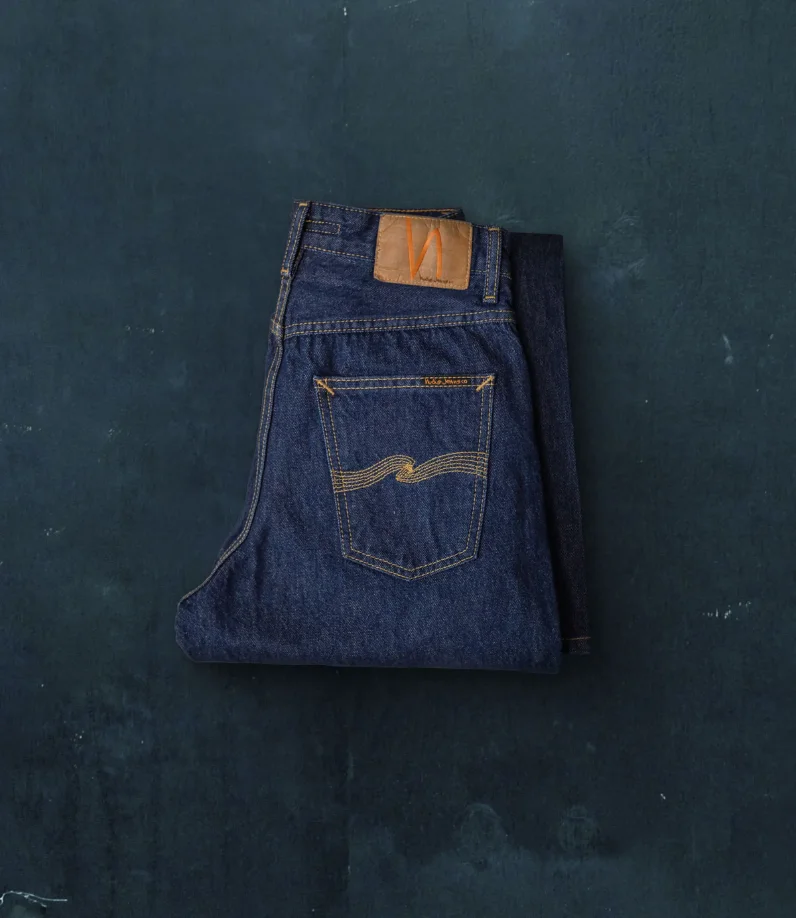
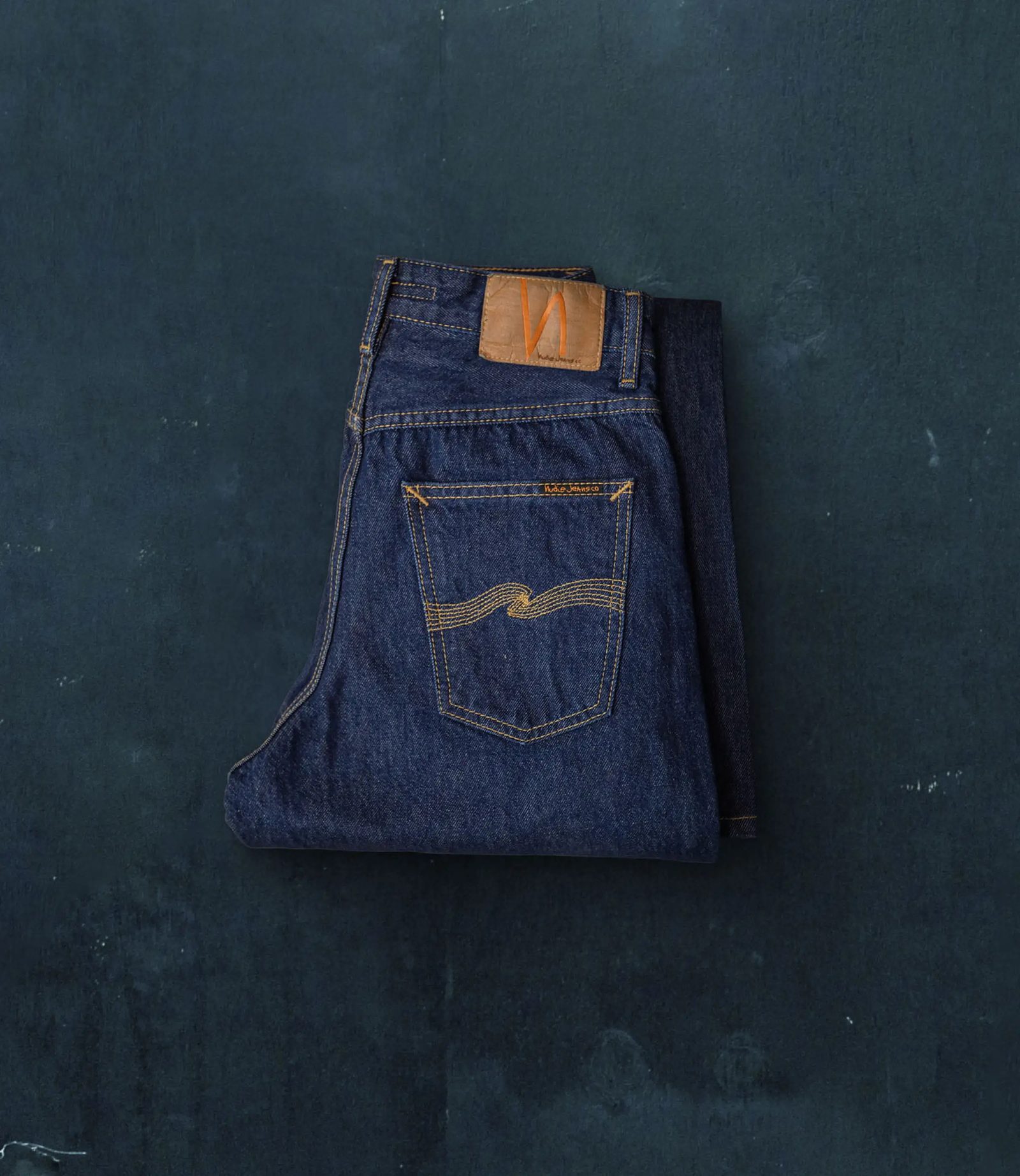
Folded raw denim jeans, pocket and topstitching visible
Behind every colour, manufacturing choices.

The more lived-in a pair of jeans looks before it reaches you, the more work it has usually taken.

Where are the jeans made? And above all: how?

The country of manufacture matters. But an address on a map isn't enough to guarantee good working conditions. Jeans made in Europe aren't automatically perfect. Jeans made further away aren't automatically bad.

So we want to know:

  • which factory the jeans are made in
  • what labour rules apply there
  • whether the workshops are audited or certified
  • whether the brand knows its suppliers
  • how far back it can trace its production chain
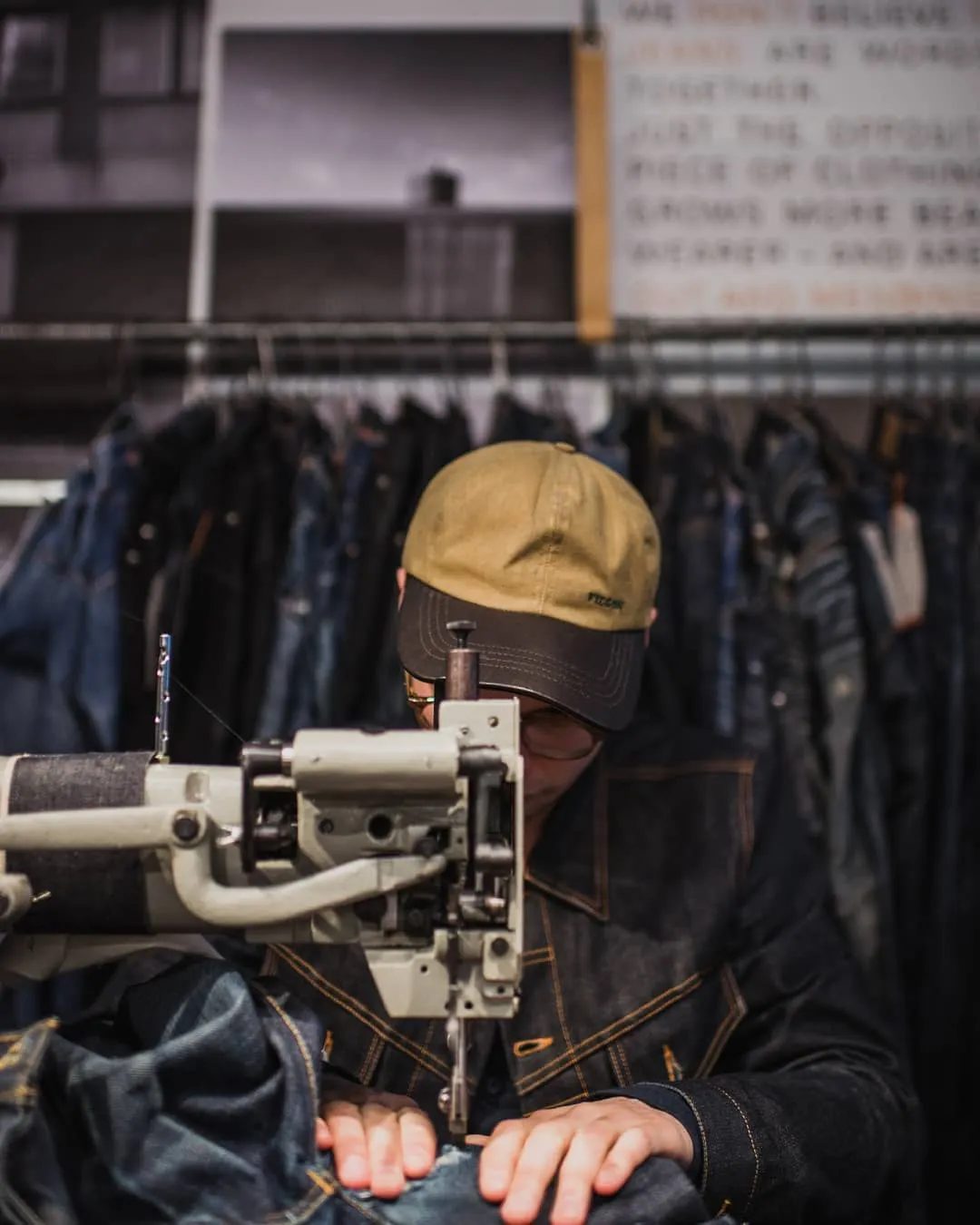
Garment workshop: a tailor working on denim fabric
An address tells you nothing about the workshop.

For us, transparency matters almost as much as location.

There's no miracle solution.

A pair of 100% organic cotton jeans can be an excellent choice.

So can a pair containing lots of recycled cotton.

And jeans with a little elastane may make more sense if they fit you much better and you'll wear them for five years.

Our job is to weigh up all these criteria without ever going below our minimum standard: 90% eco-responsible materials. Above all, it's to select jeans we think are beautiful, comfortable and durable enough that you'll want to keep them.

You choose the pair you like.
We've already taken care of the rest.

// Cuts

Which cut should you choose?

There's no such thing as jeans “made for” a body shape. What there is: cuts you feel more or less comfortable in, and volumes you enjoy wearing more or less.

What do you love in a pair of jeans?

Start with what you love wearing, or what bothers you about your current jeans.

Do you often find jeans too tight when you sit down? 01 +

Check the size and the rise.

Look at where the waistband feels tight on the jeans you own now. To choose your next pair, check the size and rise shown on the product page. Changing cut isn’t always enough: use its size guide and our tips.

Choosing the right size

Do you like to feel comfortable around the thighs and hips? 02 +

Room up top, different shapes below.

Wide straight jeans leave room at the thighs and stay roomy all the way down. For those who like space around their legs.

Do you like jeans that narrow towards the ankle? 03 +

A leg that gradually narrows.

Tapered jeans stay straight through the thigh, then get narrower towards the ankle.

straight jeans, from waist to hem

Straight

A straight cut, neither very fitted nor very loose. Jeans that are easy to pair with what you already wear.

See straight jeans
tapered jeans, from waist to hem

Tapered

Straight through the thigh, then narrower towards the ankle. For those who prefer a narrower leg opening.

See tapered jeans
slim jeans, from waist to hem

Slim

A close-fitting cut, snug at the thighs and calves. For those who like to feel their jeans follow the leg.

See slim jeans

Don't rule out a cut because of your size or body shape.

The right jeans are, above all, the ones you feel good in standing, sitting and moving, and want to put on again the next day.

// Our brands

Our jeans brands

Repairing and recirculating at Nudie Jeans, working with recycled cotton at MUD Jeans: each brand brings its own approach. Here are the ones in our men's selection.

← How we choose our brands

Folded Nudie Jeans jeans, pocket and topstitching

Lifespan · repair

Nudie Jeans

The lifespan obsessives

At Nudie Jeans, the idea isn’t just to make new jeans better.

The brand also works on everything that happens after purchase: care, repair, second hand and extending lifespan.

It’s a brand that believes jeans with holes in them aren’t necessarily finished.

At Nudie, worn-out jeans aren’t necessarily finished jeans. And of course, we love that.

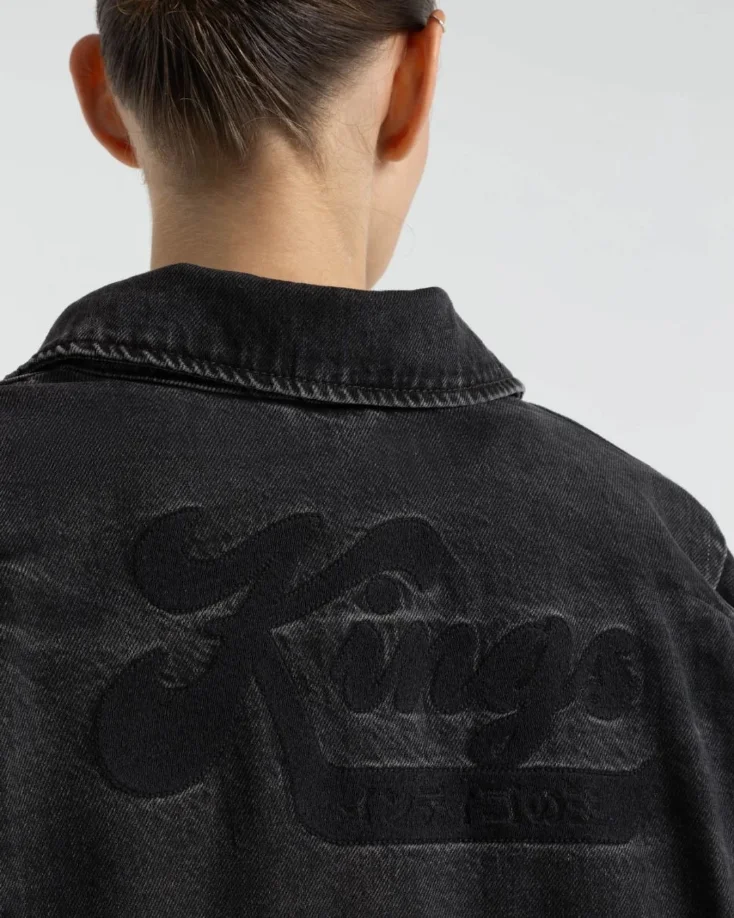
Kings of Indigo jacket worn, seen from the back

Denim expertise · experimentation

Kings of Indigo

The denim specialists who love to experiment

Kings of Indigo is first and foremost a jeans specialist.

And that matters in our selection too.

Because good jeans need more than good technical specs.

They need beautiful fabric and a good cut, they have to age well and make you want to wear them again and again.

The brand combines this denim expertise with serious work on materials and manufacturing processes.

Because really well-made jeans you don’t enjoy wearing aren’t worth much in the end.

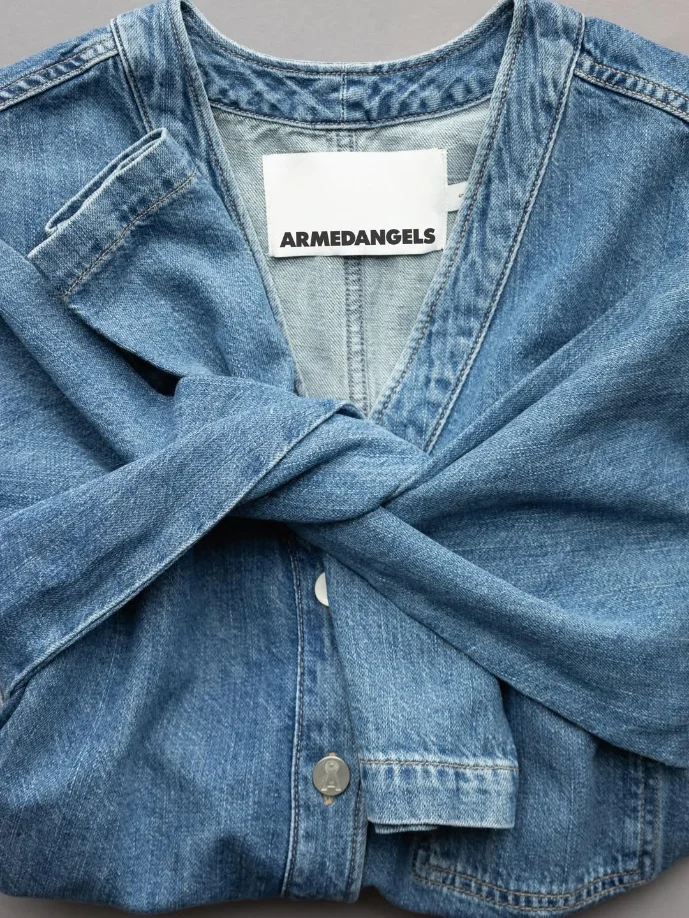
Knotted Armedangels denim garment, label detail

Dyes & processes

Armedangels

The ones who decided to detox jeans

Changing the raw material isn’t enough.

Much of the impact of jeans comes afterwards, during dyeing, washing and finishing.

With its work on DetoxDenim, Armedangels looks at the entire denim production chain.

Better cotton is good. Not drowning it afterwards in highly polluting processes is even better.

// Size and comfort

How do you choose your jeans size?

Spotted a pair of jeans, but the W and L sizes leave you puzzled? They let you choose your waist size and leg length separately.

What do W and L mean?

W
Waist: the waist measurement.
L
Length: the leg length.
Measured on the inside, from the crotch to the bottom of the leg.

Which W size should you choose?

Know your French size? Here are a few equivalents to get you started. They're only a guide: the brand, cut and material can change how they feel.

US to French equivalents, Men sizes
Jeans size (US) French size
W26 36
W27 36 / 38
W28 38
W29 38 / 40
W30 40
W31 40 / 42
W32 42
W33 42 / 44
W34 44
W35 44 / 46
W36 46
W37 46 / 48
W38 48

The catalogue groups some W sizes together. Click "See", then choose your exact size on the jeans' product page.

Your starting point: a pair of jeans that already fits you. On the product page, open "Choosing the right size" and follow the method shown to compare measurements.

Which L length should you choose?

The L length is measured from the crotch to the bottom of the leg. These guidelines give you a first length to try for jeans that reach the ankle.

Lengths, starting points
Your height Length to try
Up to around 1.60 m L28
Around 1.60 to 1.70 m L30
Around 1.70 to 1.80 m L32
Over 1.80 m L34

Are you about 1,75 m tall?
A length of L32 can be a starting point for jeans that reach the ankle.

Two people of the same height can have different leg lengths. Compare the inside leg with that of a pair of jeans whose drape you already like.

The look matters too: shorter to show off your shoes, longer to fall or break slightly over them. Check the length worn by the model when it's shown.

// Care

So you can keep wearing them for years.

Jeans you love deserve looking after. A few habits worth keeping, always following the instructions for your pair.

Wash them when they need it

Your jeans don't always need a machine wash after every wear. Between washes, air them out. How often you wash them depends on your days and their condition.

A small stain doesn't always call for the machine: try spot cleaning by gently dabbing with a damp cloth, without rubbing the fabric hard.

Go gently in the machine

Empty the pockets, turn your jeans inside out and avoid overloading the drum. Stick to the load recommended for the programme you choose.

For jeans that aren't very dirty, 30°C may be enough if the label allows it. Choose a colour-safe detergent without bleaching agents, and a gentle spin.

When the cycle ends, take them out

Unfold your jeans and hang them up to air dry. Leaving them damp and crumpled in the machine can cause marks, especially on dark denim.

Air drying is best. A delicate programme doesn't make a tumble dryer suitable for all jeans: check whether the label allows it.

First signs of wear? Now's the time to act.

Fabric wearing thin at the crotch, a tired knee, a seam coming apart: ask an alterations workshop for advice. And if there's already a hole, a repair is often still possible.

My raw jeans are losing colour: is this normal? +

Indigo-dyed raw denim can transfer colour when it rubs against things, especially at first. Take care with light-coloured shoes, bags and seats, and follow the advice for your pair.

Waiting several months before the first wash is a way to build fades suggested for some raw jeans, not a rule for all jeans. Wash yours when they need it.

How can I limit white marks when washing? +

Rubbing along the folds can leave marks, especially on dark jeans. Wash them inside out, choose a gentle spin and take your jeans out of the machine quickly to unfold and hang them up. Avoid detergents with bleaching agents and follow the brand's advice.

What if I want to iron them? +

Only iron them if you want to and if the label allows it. Iron them inside out, at the temperature given for your pair, to limit shiny marks. Cotton content alone isn't a reason to use a very hot iron: the other fibres and finishes matter too.

The pair you'll wear again tomorrow?